GPS-BWS-1993 / Beverage, Wine & Spirits

Bordeaux Bottles

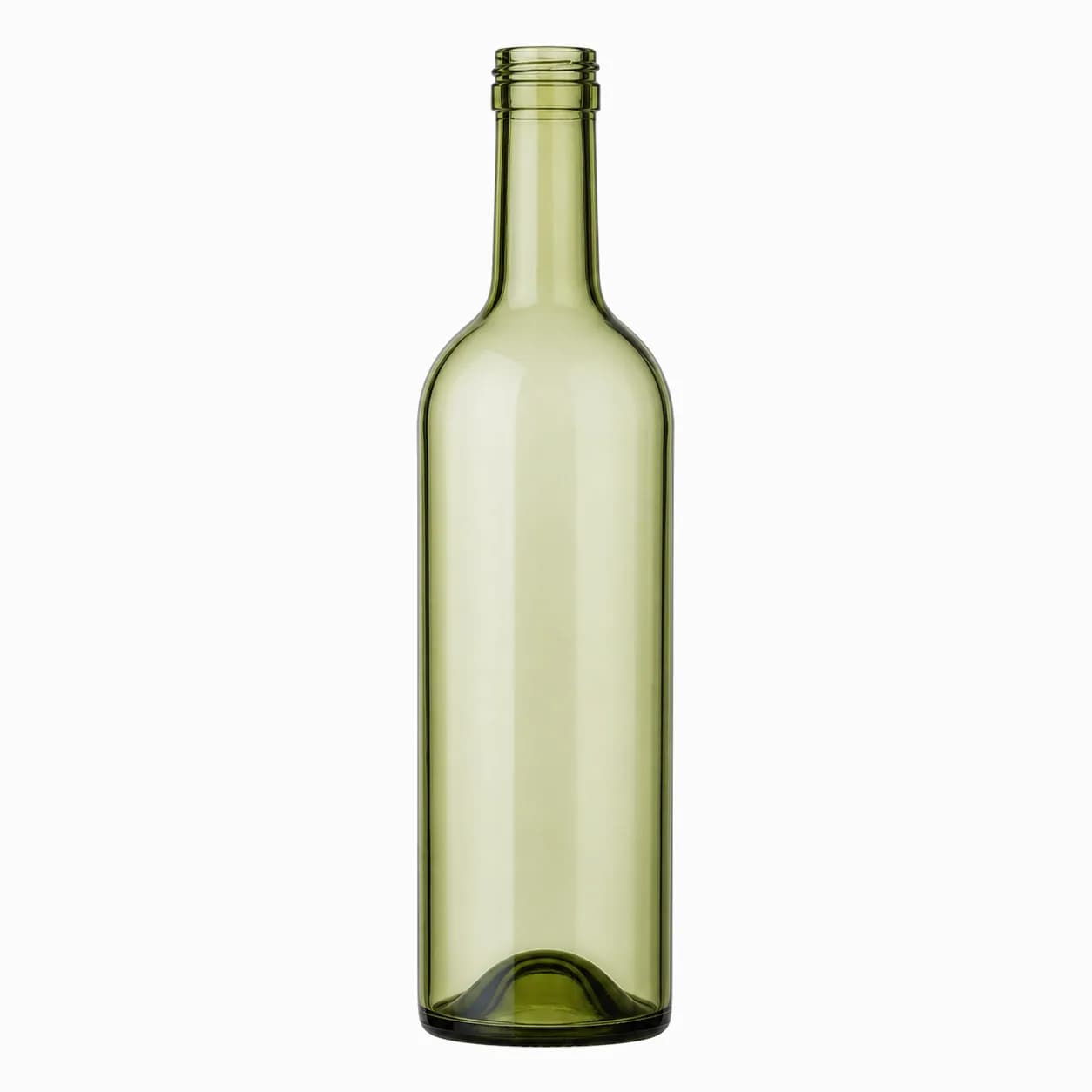
The Bordeaux is the most widely used wine bottle in the world: straight sides, high square shoulders and a standard 750 ml volume. The pronounced shoulder helps hold back sediment when pouring older reds, and the cylindrical body bin-stores and labels efficiently. We supply it in antique green, dead-leaf green and flint for cork or screwcap finishing.

GPS-BWS-1993Model Code187 ml – 1500 mlCapacity Range20,000 pcsStarting MOQFrom $0.84Indicative Price
Bulk quote guidanceFrom $0.84Final price depends on capacity, closure, decoration, quantity and packing plan.
Request a Quote

Specification

Details Buyers Need Before Quotation

ModelGPS-BWS-1993
Product familyBordeaux Bottles
Typical capacity187 ml (piccolo), 375 ml, 750 ml, 1500 ml (magnum)
MaterialSoda-lime wine-grade glass
Glass colorAntique green, dead-leaf (feuille morte) green, amber, flint
Neck / finishCork-mouth (cetie bague) or BVS 30 x 60 screw finish
ClosureNatural / agglomerated cork, T-top, or aluminum screw cap (Stelvin-type)
Punt / basePunted base standard; flat base optional on lighter weights
DecorationFront/back labels, screen print, embossed shoulder seal, capsule
Packing6 or 12-bottle partition cartons; layer-stacked export pallets
Starting MOQStarting from 20,000 pcs; lower trial quantity depends on available stock

Product Knowledge

About the Bordeaux Bottles

Background, typical uses, construction, filling guidance and production notes for buyers selecting this container for bulk supply or private-label programs.

Overview & background

The Bordeaux bottle is defined by its high, abrupt shoulder and straight cylindrical body. That shoulder is not only stylistic — when an aged red throws sediment, the square shoulder traps the deposit as the bottle is tipped, helping pour a clearer glass. The 750 ml standard, now fixed by EU and US law, grew up around this shape.

Its straight sides are the practical reason it dominates global wine: cylindrical bottles bin-store densely, label without distortion and run smoothly on high-speed bottling lines, which is why it is the default for everything from estate Cabernet to bulk private-label wine.

Applications & industries

Classically the bottle of Bordeaux's Cabernet Sauvignon and Merlot blends, it is now used for still reds and whites of almost every variety, rosé, and the great majority of New World and private-label wine. Dark green is traditional for reds (it also screens light that can degrade wine), while flint shows off the color of rosé and whites.

Design & construction

Two finish systems dominate: a cork mouth made to the CETIE bore standard, and the BVS 30 x 60 finish for aluminum screw caps. The bottle weight is a real specification — 'eco' bottles run around 380–410 g while heavy prestige bottles exceed 550 g — and it affects both shipping cost and shelf perception. A molded punt is standard, partly tradition, partly for strength and stacking.

Handling & best practice

Wine is filled cold, so thermal shock is rarely an issue, but fill height and headspace must be controlled so corks seat correctly and labels align. For cork closures, allow the bottle to stand briefly before laying down so the cork settles. Screwcap (BVS) finishes need an undamaged thread and a clean sealing ring for a reliable seal.

Specify a green or amber glass where the wine will see retail light for long periods, since UV and visible light can cause 'lightstrike' off-flavors, especially in delicate whites and rosé.

Manufacturing & quality

Wine bottles are narrow-neck containers formed by blow-and-blow or, for lighter weights, narrow-neck press-and-blow (NNPB), which controls glass distribution and allows lightweighting without weak spots. Color comes from iron, chromium and manganese oxides added to the batch.

After forming, bottles are annealed in a lehr to relieve stress, then surface-treated; finish bore and screw threads are gauged closely because cork and cap sealing depend on them.

Build Options

Configure the Container, Closure and Packing Together

A packaging program is more than the glass. Closure, liner, fill process, label area and export carton should be confirmed together before the first sample or bulk order.

Capacity & Shape

Confirm brimful capacity, practical fill level, body proportions and label panel so the chosen size suits the product and the line.

Closure System

Match lug, CT, cork, pump or dispensing closures with the right liner for the fill temperature, viscosity and sealing method.

Glass & Finish

Clear or amber glass, sprayed color, frosting, embossing and decoration are checked against shelf presentation and light protection.

Export Packing

Carton partitions, pallet pattern, loading plan and shipping marks are planned for long-distance transport and warehouse handling.

Applications

Where the Bordeaux Bottles Fits

Share filling temperature, product acidity, viscosity and shelf-life target so we can check the container, closure liner and packing method before quotation.

Red Bordeaux blendsCabernet & MerlotStill reds & whitesRoséPrivate-label wineEstate bottlingBulk wine programsExport wine

Stock or Custom Build

Review available molds first, then evaluate color, decoration or a mold change if the project needs a differentiated retail look.

Sample Confirmation

Confirm capacity, closure fit, liner selection, label area and carton protection with samples before bulk production.

Export Preparation

Cartons, dividers, pallet loading and shipping marks are planned for distributors, warehouses and multi-country shipments.

Bulk Quote

Need Bordeaux Bottles With Closures, Labels or a Custom Finish?

Send capacity, quantity, closure, decoration and destination details. We will return practical MOQ guidance, sample options and export packing recommendations.

Request a Quote