Overview & background
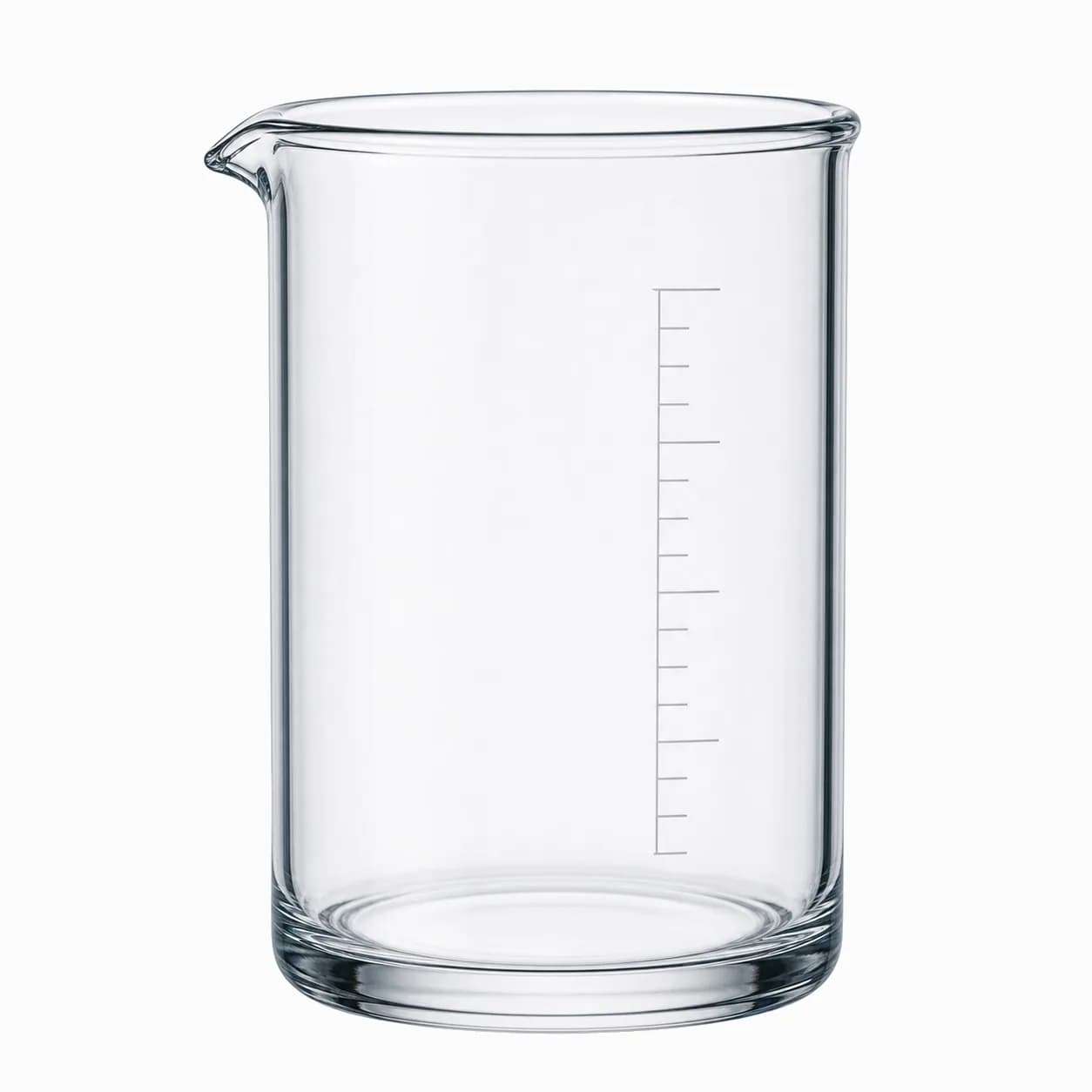
The beaker is the most basic and ubiquitous piece of lab glass: a straight-sided cylinder with a flat base, a pouring spout and a beaded rim. The common Griffin (low) form balances stability and pouring ease. Its printed scale lets you judge volumes roughly, but a beaker is an approximate vessel — its tolerance is typically around ±5%, so it is never used where accuracy matters.
In borosilicate 3.3 it takes direct heating and thermal shock, making it the default open vessel for mixing, dissolving, heating and transferring.