GPS-LAB-4316 / Laboratory & Chemical

Borosilicate Erlenmeyer Flasks

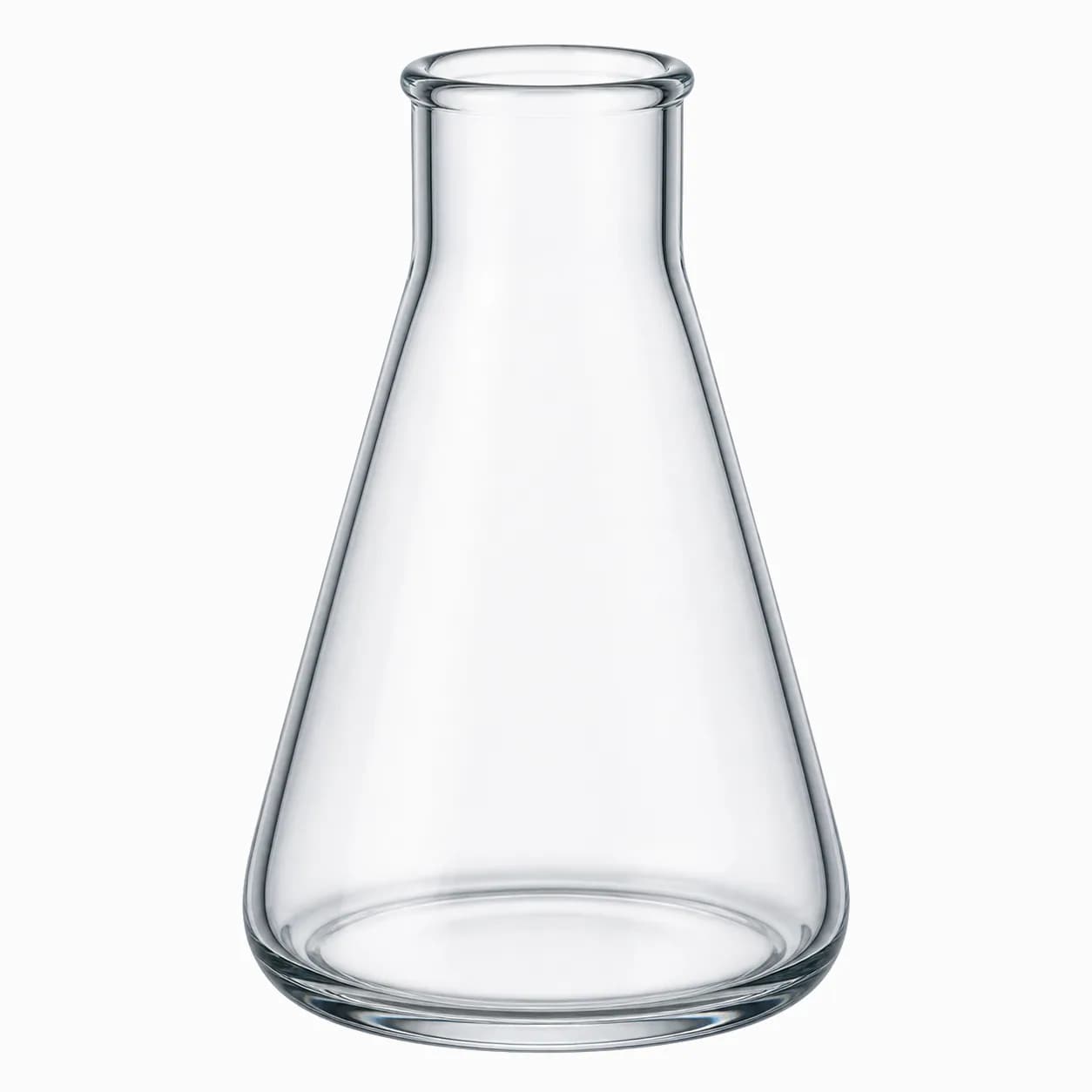
The conical Erlenmeyer flask — a flat-bottomed cone with a narrow neck — in borosilicate 3.3 glass for heating, mixing, titration and culturing. Its shape allows vigorous swirling without splashing and a stopper or cotton plug at the neck, making it one of the most-used flasks in any lab.

GPS-LAB-4316Model Code25 ml – 5000 mlCapacity Range3,000 pcsStarting MOQFrom $0.72Indicative Price
Bulk quote guidanceFrom $0.72Final price depends on capacity, closure, decoration, quantity and packing plan.
Request a Quote

Specification

Details Buyers Need Before Quotation

ModelGPS-LAB-4316
Product familyBorosilicate Erlenmeyer Flasks
Capacity25 ml, 50 ml, 100 ml, 250 ml, 500 ml, 1000 ml, 2000 ml, 5000 ml
MaterialBorosilicate 3.3 glass
Glass colorClear
Mouth / finishNarrow neck; plain, beaded rim or ground-joint / screw option
ClosureCotton plug, rubber/silicone bung, ground stopper, or screw cap
GraduationsApproximate enamel graduations (not Class A)
TemperatureThermal-shock resistant; suitable for direct heating with care
PackingCartoned individually or in counts
Starting MOQStarting from 3,000 pcs; lower trial quantity depends on available stock

Product Knowledge

About the Borosilicate Erlenmeyer Flasks

Background, typical uses, construction, filling guidance and production notes for buyers selecting this container for bulk supply or private-label programs.

Overview & background

The Erlenmeyer flask, designed by chemist Emil Erlenmeyer in 1860, is the conical flat-bottomed flask found in every lab. Its sloping sides and narrow neck are deliberately functional: the contents can be swirled hard to mix or dissolve without splashing out, the narrow opening reduces evaporation and is easy to stopper, and the flat base sits stably on a hotplate.

In borosilicate 3.3 it tolerates heating and thermal shock, which is why it is used for everything from boiling and recrystallisation to microbial shake-flask culture.

Applications & industries

Heating and boiling, mixing and titration, microbial culture in shake flasks, recrystallisation, sample preparation, and general chemistry, in teaching, QC and research labs. Wide-mouth and baffled versions exist for culturing; ground-joint versions connect to other apparatus.

Design & construction

A conical borosilicate 3.3 body with a flat base and a narrow neck, finished with a plain beaded rim, a ground joint, or a screw thread depending on use. Approximate enamel graduations aid rough volume estimation but are not Class A. The narrow neck takes a cotton plug, bung, stopper or cap.

Handling & best practice

Borosilicate withstands direct heating, but heat gradually and use a flame guard or hotplate evenly to avoid hot spots; never heat a sealed flask. The graduations are approximate, so use a measuring cylinder or volumetric flask for accurate volumes. Inspect for star cracks before heating, as a flawed flask can fail under thermal stress.

Manufacturing & quality

Formed from borosilicate 3.3 by blowing into the conical shape, then annealed to relieve stress — important for glass that will be heated and cooled repeatedly. Enamel graduations are screen-printed and fired. Wall evenness and thermal performance are checked.

Build Options

Configure the Container, Closure and Packing Together

A packaging program is more than the glass. Closure, liner, fill process, label area and export carton should be confirmed together before the first sample or bulk order.

Capacity & Shape

Confirm brimful capacity, practical fill level, body proportions and label panel so the chosen size suits the product and the line.

Closure System

Match lug, CT, cork, pump or dispensing closures with the right liner for the fill temperature, viscosity and sealing method.

Glass & Finish

Clear or amber glass, sprayed color, frosting, embossing and decoration are checked against shelf presentation and light protection.

Export Packing

Carton partitions, pallet pattern, loading plan and shipping marks are planned for long-distance transport and warehouse handling.

Applications

Where the Borosilicate Erlenmeyer Flasks Fits

Share filling temperature, product acidity, viscosity and shelf-life target so we can check the container, closure liner and packing method before quotation.

Heating & boilingMixing & titrationMicrobial culture (shake flasks)RecrystallisationSample preparationTeaching labsQC & analysisGeneral chemistry

Stock or Custom Build

Review available molds first, then evaluate color, decoration or a mold change if the project needs a differentiated retail look.

Sample Confirmation

Confirm capacity, closure fit, liner selection, label area and carton protection with samples before bulk production.

Export Preparation

Cartons, dividers, pallet loading and shipping marks are planned for distributors, warehouses and multi-country shipments.

Bulk Quote

Need Borosilicate Erlenmeyer Flasks With Closures, Labels or a Custom Finish?

Send capacity, quantity, closure, decoration and destination details. We will return practical MOQ guidance, sample options and export packing recommendations.

Request a Quote