Overview & background
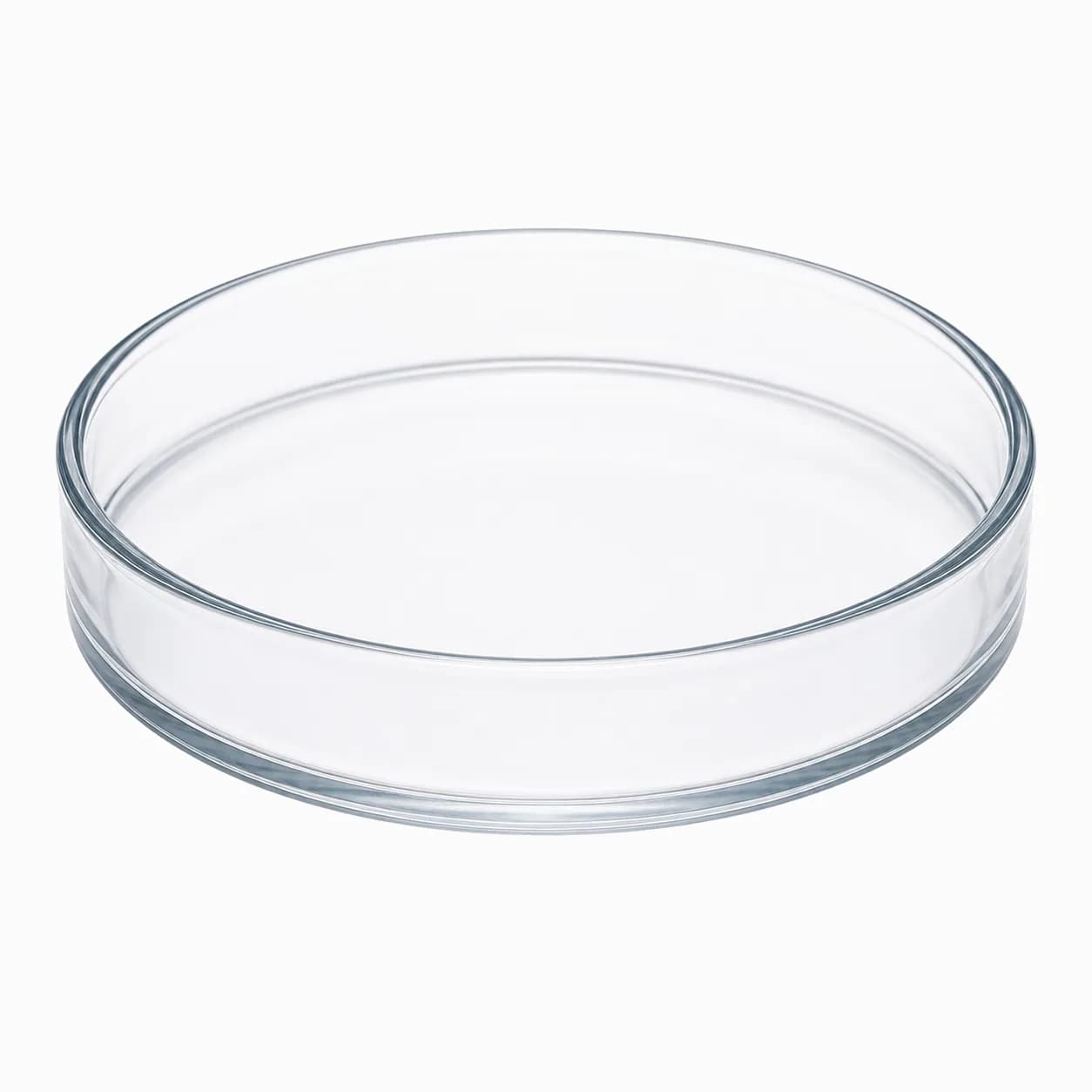
The Petri dish — devised by Julius Petri in Robert Koch's lab in 1887 — is the shallow round dish used to grow micro-organisms on a layer of agar. Its loose, overlapping lid is deliberate: it keeps airborne contaminants out while allowing a little gas exchange, so cultures can breathe without being exposed.
Glass Petri dishes are reusable and autoclavable, so labs that culture heavily and want to avoid single-use plastic favor them; the high clarity of borosilicate makes colonies and growth easy to examine.