GPS-FS-2760 / Food & Sauce

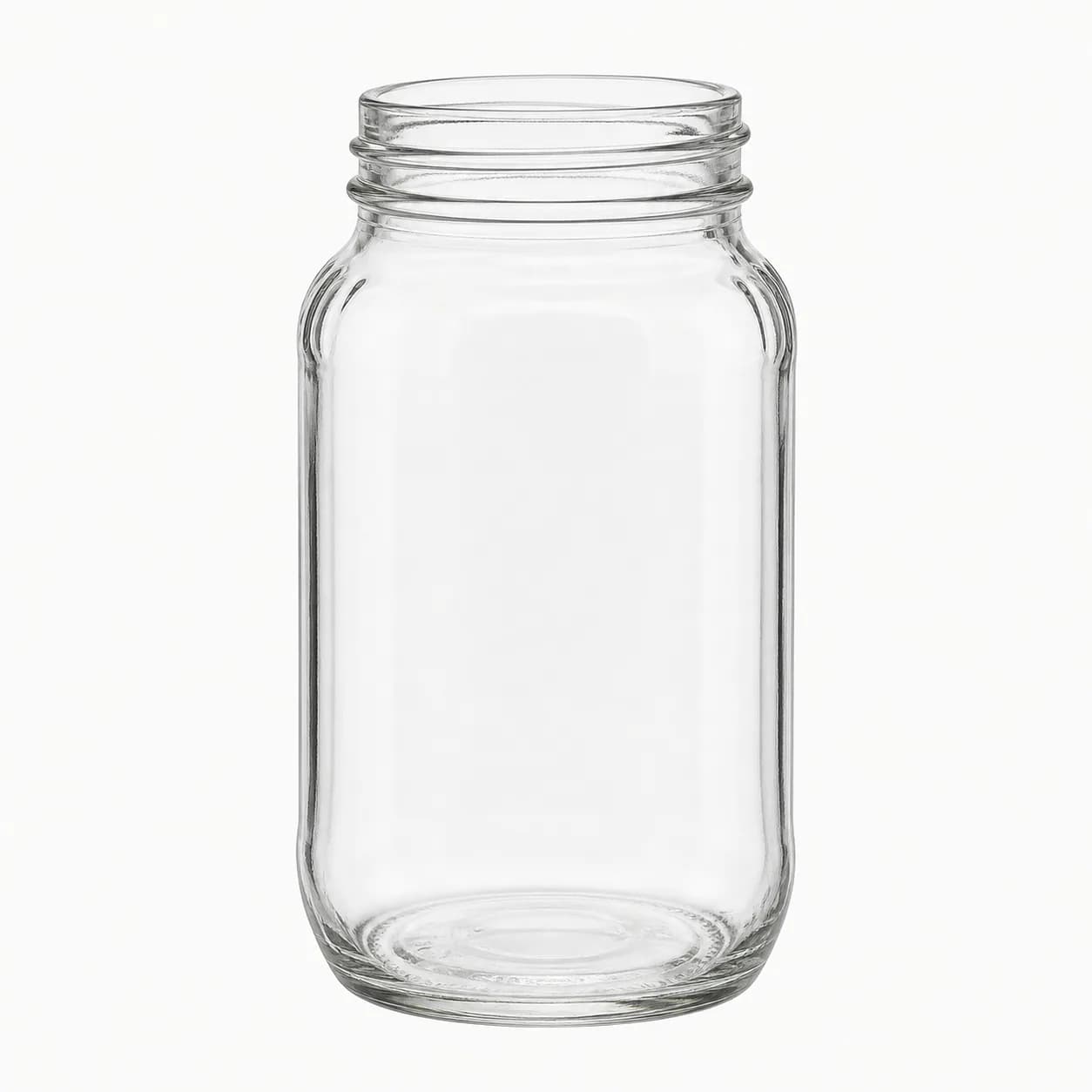
Classic Mason Jars

The classic mason jar is the workhorse of home and artisan food packing: a thick, straight-shouldered jar with a threaded mouth and a two-piece lid that seals under vacuum. We supply it for jam, honey, pickles, sauces and dry pantry goods, in regular- and wide-mouth finishes from small preserve sizes up to one-liter storage jars.

GPS-FS-2760Model Code120 ml – 1000 mlCapacity Range20,000 pcsStarting MOQFrom $0.51Indicative Price
Bulk quote guidanceFrom $0.51Final price depends on capacity, closure, decoration, quantity and packing plan.
Request a Quote

Specification

Details Buyers Need Before Quotation

ModelGPS-FS-2760
Product familyClassic Mason Jars
Typical capacity120 ml, 250 ml, 380 ml, 500 ml, 750 ml, 1000 ml
MaterialFood-contact soda-lime glass
Glass colorFlint (clear) standard; amber or sprayed color on request
Mouth finish70 mm regular-mouth and 86 mm wide-mouth continuous thread
Closure matchTwo-piece lid (flat disc + screw band), one-piece BPA-NI lug or CT cap, plastic storage lid
Liner / sealPlastisol sealing compound on disc lids; PE-foam or pressure-sensitive liners on CT caps
DecorationPressure-sensitive label, screen print, frosting, ACL ceramic print, shrink sleeve
PackingBulk-palletised or partition cartons, shrink-wrapped trays, export marks on request
Starting MOQStarting from 20,000 pcs; lower trial quantity depends on available stock

Product Knowledge

About the Classic Mason Jars

Background, typical uses, construction, filling guidance and production notes for buyers selecting this container for bulk supply or private-label programs.

Overview & background

The mason jar takes its name from John Landis Mason, who patented the threaded glass jar with a reusable screw closure in 1858. The design solved a real problem of the era: a molded thread on the glass let households seal preserves repeatedly without wax or wired-on lids. The modern two-piece system — a flat metal disc that seals on the rim and a separate band that only holds it during processing — came later but kept the same name.

What people call a mason jar today is really a finish standard rather than a single shape. The defining feature is the bead and continuous thread sized for 70 mm or 86 mm lids, which is why lids from different brands interchange. The straight, slightly tapered body is a practical consequence: it lets the jar be stacked, demoulded cleanly and emptied without trapping product in the shoulder.

Applications & industries

Beyond the home kitchen, mason jars are a default for small-batch and craft food brands — fruit preserves, raw and creamed honey, fermented vegetables, chutneys, infused oils, dry mixes and overnight-oat style products. The wide-mouth version is preferred for chunky or set products that need to be spooned out, while the regular mouth suits pourable sauces and is cheaper to cap.

The jar also has a strong secondary life as a serving and merchandising vessel: cafés use it for cold drinks, and gifting brands fill it with granola, candles or bath salts. That reusability is part of its retail appeal and is worth designing the label and lid around.

Design & construction

Mason jars run heavy on purpose. The thick base and rounded heel resist the thermal and mechanical stress of boiling-water and pressure canning, and the broad sealing bead gives the plastisol-lined disc a wide, forgiving surface to grip. Regular-mouth jars use a 70G/70-450 style finish; wide-mouth jars typically use an 86 mm finish that opens the shoulder almost to the body diameter.

Embossed measurement marks, fruit motifs or panel areas can be cut into the mold, but deep embossing on the body slightly reduces label contact area — worth confirming against your labeling method before tooling.

Handling & best practice

For shelf-stable preserves the jars are usually hot-filled at 82–88 °C or water-bath processed; leave the recommended headspace (about 6–10 mm) so the disc can pull down and form the vacuum button. Do not over-tighten the band before processing — the air needs to vent. After cooling, the centre button should be concave and not flex.

Soda-lime glass tolerates hot-fill but not sudden thermal shock; avoid pouring boiling product into a cold jar straight from a cold store. Reusing jars for home canning is common, but the flat sealing discs are single-use because the plastisol deforms on first seal.

Manufacturing & quality

Mason jars are wide-mouth containers, so they are formed on the press-and-blow process: a plunger presses the gob into a parison in the blank mold, then air blows it to final shape in the blow mold. Press-and-blow gives the even, relatively heavy wall these jars need for canning.

After forming, the jars pass through an annealing lehr to relieve internal stress, then through hot-end and cold-end coatings that protect the surface and improve line lubricity. Dimensional, thermal-shock and (for canning grades) internal-pressure checks are standard before packing.

Build Options

Configure the Container, Closure and Packing Together

A packaging program is more than the glass. Closure, liner, fill process, label area and export carton should be confirmed together before the first sample or bulk order.

Capacity & Shape

Confirm brimful capacity, practical fill level, body proportions and label panel so the chosen size suits the product and the line.

Closure System

Match lug, CT, cork, pump or dispensing closures with the right liner for the fill temperature, viscosity and sealing method.

Glass & Finish

Clear or amber glass, sprayed color, frosting, embossing and decoration are checked against shelf presentation and light protection.

Export Packing

Carton partitions, pallet pattern, loading plan and shipping marks are planned for long-distance transport and warehouse handling.

Applications

Where the Classic Mason Jars Fits

Share filling temperature, product acidity, viscosity and shelf-life target so we can check the container, closure liner and packing method before quotation.

Jam & preservesHoneyPickles & fermentsCooking saucesDry food storageSpice blendsWedding & gift favoursPantry refills

Stock or Custom Build

Review available molds first, then evaluate color, decoration or a mold change if the project needs a differentiated retail look.

Sample Confirmation

Confirm capacity, closure fit, liner selection, label area and carton protection with samples before bulk production.

Export Preparation

Cartons, dividers, pallet loading and shipping marks are planned for distributors, warehouses and multi-country shipments.

Bulk Quote

Need Classic Mason Jars With Closures, Labels or a Custom Finish?

Send capacity, quantity, closure, decoration and destination details. We will return practical MOQ guidance, sample options and export packing recommendations.

Request a Quote