Overview & background
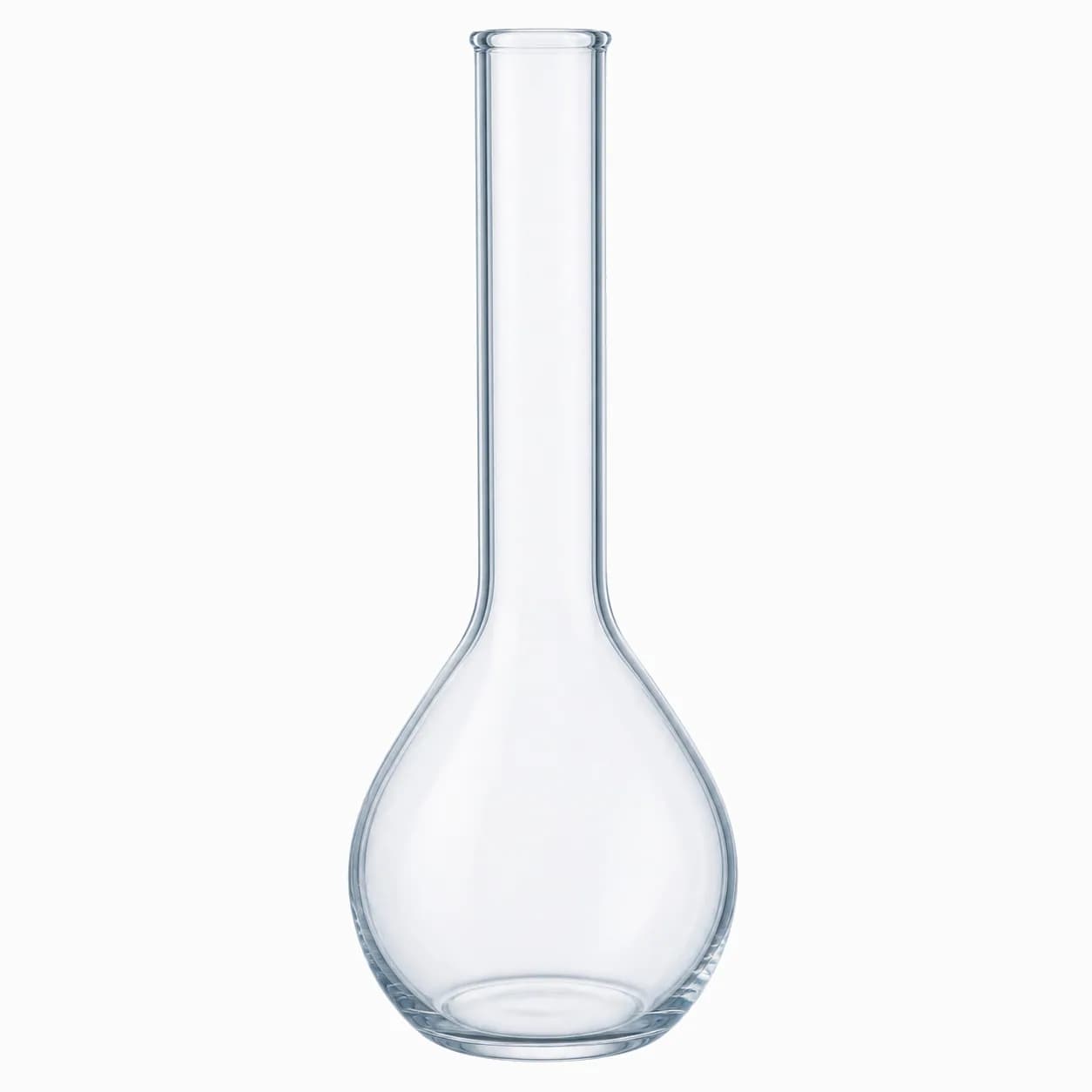
The Kjeldahl flask is purpose-made for the Kjeldahl method, the classic way to measure the nitrogen content of a sample — and from it, protein. The sample is boiled in concentrated sulphuric acid with a catalyst until it is fully digested, a fierce, fuming, high-temperature step that the flask must survive.
Its defining feature is the long neck: it acts as an air condenser, letting acid vapour condense and run back into the bulb so the digestion does not boil dry or lose sample, while keeping corrosive fumes away from the operator and the heater.